Jorge Zárate – September, 2025
Redefining Luxury: The 2025 Playbook for Travel Professionals
Introduction: The New Language of Luxury
For decades, the term “luxury hospitality” conjured static, universally accepted images: marble lobbies, gold-leaf accents, chauffeur-driven Rolls Royces, and impeccably dressed staff delivering formal, yet often impersonal, service. It was a standardized, one-size-fits-all concept of opulence, a global benchmark that varied little from Paris to Singapore. But as we move through 2025, that entire definition has been thoroughly dismantled and rebuilt. The fundamental question, “What is Luxury?” has become the central challenge and the most significant opportunity for every travel professional today. The answer is no longer found in a style guide but in a deep, empathetic understanding of the evolving human desire for meaning, connection, and personal transformation.
The very etymology of the word, originating from terms meaning “excess,” feels almost archaic. Today, luxury is paradoxically defined not by more, but by better. It is the scarce resource of time, perfectly personalized and reclaimed. It is the authenticity of a local connection, not the isolating perfection of a gilded cage. The modern luxury traveler, increasingly from the Millennial and Gen Z cohorts, isn’t just buying a service or a comfortable bed; they are investing in a transformation, a story to tell, and a set of values that align with their own. They are curating a lifestyle, and their travel choices are the most vivid expression of that curation.
This seismic shift is driven by powerful demographic, technological, and psychographic forces converging at once. With younger generations projected to represent the overwhelming majority of luxury purchases by 2030, their priorities are not merely influencing but actively rewriting the industry’s game plan. They value experiences over material things, sustainability and ethical practices over mere showmanship, and seamless, intuitive digital integration that empowers rather than complicates. This blog post will delve into the key trends shaping this exciting new era, from the rise of the “anywhere traveler” and the non-negotiable demand for authenticity to the delicate balance between AI-powered personalization and the irreplaceable human touch. Furthermore, we will crucially translate these macro-trends into the high-stakes, complex world of MICE, providing a clear roadmap for those looking to capture the loyalty of the most valuable travelers in the world.
1: The Changing Face of the Luxury Traveler
The demographics of luxury have undergone a dramatic and permanent explosion. The archetype of the silver-haired, ultra-wealthy retiree leisurely touring the classics of Europe is now just one fragment of a much broader, more vibrant picture. Luxury is no longer an exclusive club defined solely by immense net worth; it is increasingly accessible to a ambitious, experience-driven professional class. A significant and growing portion of the market now includes travelers with substantial disposable income who choose to allocate a larger share of it to high-value travel experiences, prioritizing memories over material goods.
Even more telling than wealth is the profound age shift. The narrative that luxury is the domain of older generations has been completely overturned. The vast majority of the luxury leisure market is now made up of people below the age of 60, with spending on travel peaking among those between 40 and 60 years old. This is a younger, more dynamic, digitally-native, and discerning crowd that approaches luxury with a different set of expectations and values.
This younger cohort is fundamentally driving the industry’s growth. Gen Z, now entering the workforce with considerable influence and an estimated spending power in the hundreds of billions, is particularly impactful. They are not the future; they are the present. This generation prioritizes a holistic set of values: immersive experiences, genuine sustainability, and seamless omni-channel engagement where the lines between digital and physical blur effortlessly. Furthermore, a powerful lingering post-pandemic desire to “make up for lost time” continues to fuel the market. This phenomenon has led nearly half of all travelers to report they are likely to spend more on their next trip, not just on accommodation, but on upgrading every facet of their experience—from flights and dining to exclusive activities and wellness treatments. This isn’t just travel; it’s targeted investment in personal well-being and joy.
2: The Experience Economy and the Quest for Authenticity
If there is one unifying principle defining the new luxury, it is the insatiable demand for a unique and authentic experience. We have fully transitioned from a goods-based economy to an experience economy, where the value is derived not from a product but from the memory and personal growth it fosters. Research consistently shows that a vast majority of Millennial and Gen Z travelers actively seek out novel experiences that their peers have not heard of, driven by a desire to cultivate a unique personal identity and a genuine connection to the places they visit. This move away from the checklist of iconic landmarks towards a more personal, curated journey is the single most important trend for professionals to understand.
This overarching demand has given rise to two powerful and interrelated sub-trends that are actively shaping travel itineraries and destination choices:
- The “Anywhere Traveler” and Detour Destinations: Fueled by a growing awareness of and desire to avoid overtourism, a new type of traveler has emerged. Sometimes dubbed the “anywhere traveler,” this individual has the wealth and time to travel nearly anywhere but is discriminating enough not to visit just anywhere. This group has a strong passion for experiences that take them off the traditional travel pathways to less obvious, often secondary destinations. This isn’t just about being different; it’s about sustainability, preserving the integrity of popular destinations, and discovering a more genuine, unfiltered sense of place. Data shows that a significant majority of consumers are now likely to visit a detour destination on their next trip. This has propelled cities like Girona, Spain (a captivating detour from the crowds of Barcelona), Fukuoka, Japan (a culinary and cultural gem beyond Tokyo), and Brescia, Italy (a historic alternative to Milan) into the spotlight. The appeal is a quieter, more crowd-free experience that feels more personal and discovered.
- Hyper-Local Authenticity: Beyond the destination itself, authenticity is the new currency within the destination. The modern luxury traveler wants to feel the pulse of a place. This means dining on regionally sourced food at a family-owned trattoria, not just the hotel’s five-star international restaurant. It means drinking locally crafted beer or wine from a nearby vineyard, not just a famous, imported champagne. It means seeking out interactions with local artisans, guides, and residents to understand their culture and way of life. For luxury hospitality brands, this is not a challenge but a tremendous opportunity to make a positive impact. It’s a chance to deeply embed the property within its community by forming meaningful partnerships with local boutique stores, independent tour-guide services, farm-to-table restaurants, and artists. This approach not only enhances the guest experience but also helps ensure these local businesses can thrive throughout the tourist season and beyond, creating a virtuous cycle of sustainable and ethical tourism.
3: The Luxury MICE Evolution: Where Experience Meets Execution
The trends reshaping individual luxury travel are not confined to leisure; they are simultaneously and powerfully transforming the Meetings, Incentives, Conferences, and Exhibitions (MICE) industry. The era of the traditional, stuffy conference—held in a generic, windowless hotel ballroom with bad coffee and fluorescent lighting—is decisively over. The modern luxury meeting attendee is, first and foremost, an “anywhere traveler” in a professional context. They bring the same expectations for authenticity, wellness, personalized service, and unique experiences from their vacations into their business trips. Companies investing significant sums in high-end meetings and incentives are now looking for far more than just extensive square footage and high-speed internet. They are now partners in curating environments that foster creativity, well-being, and genuine connection, aligning with their corporate values around employee experience, sustainability, and social responsibility.
The goal for the modern meeting planner is to create an event that feels less like a corporate obligation and more like a curated, transformative journey for every single attendee. It’s about designing an agenda that inspires and energizes, not just one that informs.
Luxury Destinations with World-Class MICE Infrastructure:
The most forward-thinking destinations and properties are already leading the charge, seamlessly blending state-of-the-art convention facilities with the authentic, experience-driven amenities today’s delegates crave.
- Abu Dhabi, UAE: A prime example of a “detour destination,” Abu Dhabi offers a compelling cultural and sophisticated alternative to Dubai. Beyond the stunning, state-of-the-art Abu Dhabi National Exhibition Centre (ADNEC), the city offers unique team-building experiences like private desert safaris under the stars, curated tours of the breathtaking Louvre Abu Dhabi, and exclusive dining experiences that blend modern luxury with ancient traditions.
- Santa Barbara, California, USA: Perfectly embodying the “coolcation” vibe, Santa Barbara provides an idyllic setting for executive retreats and high-level meetings. Its luxury resorts boast significant and flexible meeting spaces, but the real value lies outside the walls: strategy sessions can be followed by private wine tastings in sun-drenched vineyards, and leadership workshops can be complemented by mindfulness sessions on a pristine Pacific beach.
- Fukuoka, Japan: For groups seeking a distinct cultural and culinary alternative to Tokyo, Fukuoka is a revelation. Its modern conference centers are complemented by the city’s vibrant energy. Delegates can experience authentic team-building through hands-on ramen-making classes, explore ancient temples and shrines, and unwind in traditional onsens (hot springs), offering a perfect blend of business and deep cultural immersion.
The Evolved Role of the Planner:
For meeting planners, this new paradigm demands a fundamental shift in identity, from logistics manager to experience architect. This elevated role involves:
- Strategic Venue Selection: Choosing properties and destinations that offer a true sense of place and opportunities for local immersion, not just the most convenient or largest space.
- Curated F&B Experiences: Moving entirely away from standard banquet meals towards hyper-local, sustainable, and health-conscious culinary journeys. Think chef’s tables featuring local ingredients, interactive food stations, and menus that tell a story about the destination.
- Agenda Weaving: Intentionally designing the agenda to weave in “local authentic experiences.” This could be a private after-hours tour of a world-class museum, a masterclass with a local artisan (e.g., a calligrapher in Japan, a leather worker in Italy), or a wellness session like sunrise yoga in a stunning natural setting.
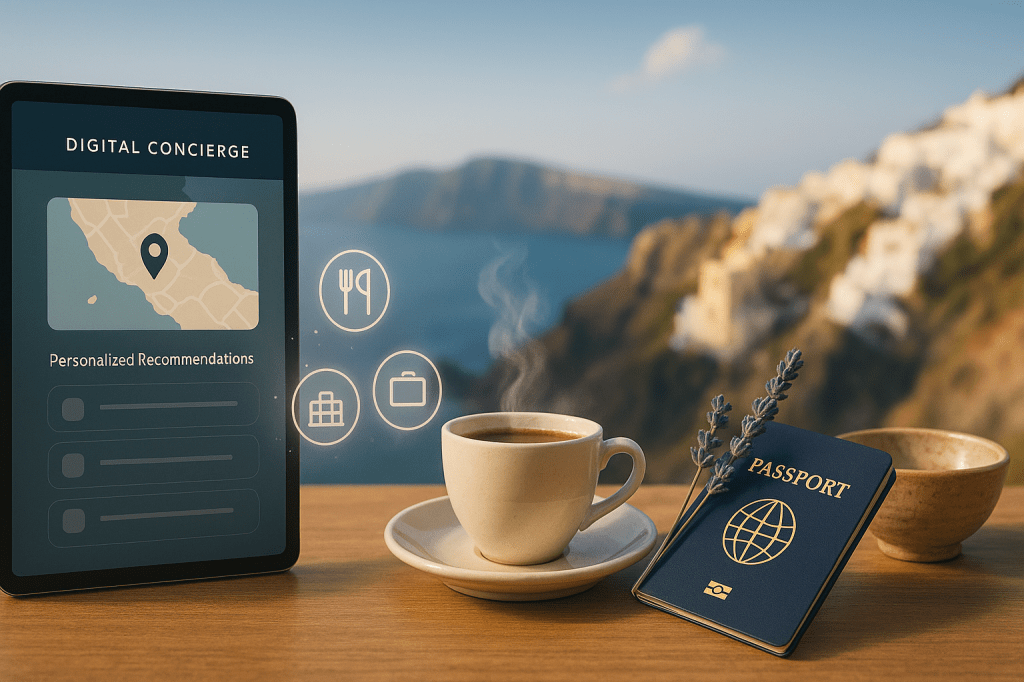
- Technology for Personalization: Using event apps and data not just for schedules and logistics, but to offer personalized activity recommendations to attendees during their downtime, effectively acting as a digital concierge that enhances the human touch.
4: The Technology-Humanity Balance
In the new luxury landscape, technology is the great enabler, the invisible engine that powers seamless experiences. However, it is crucial to understand that it is not the goal itself. The ultimate objective remains the creation of unforgettable human moments. The key to success in 2025 and beyond is the masterful fusion of cutting-edge innovation with the timeless, intuitive warmth of the human touch.
Today’s travelers, regardless of age, expect a baseline of seamless digital integration. This includes frictionless mobile check-in and check-out, digital key access, high-speed Wi-Fi as a standard utility, and mobile payment options. Behind the scenes, Artificial Intelligence and data analytics power hyper-personalization, analyzing guest preferences to tailor everything from room temperature and lighting to meal recommendations and activity suggestions before the guest even asks.
However, the consensus among forward-thinking industry leaders is unequivocal: technology must serve to support, never to replace, human connection. Its highest purpose is to automate mundane, administrative tasks freeing staff from behind desks and computer screens to provide the intricate, personal touches that truly define luxury. It’s about using a mobile app to handle a simple room service order so that the concierge has more time to secure that impossible reservation at the city’s most sought-after restaurant. The ultimate luxury, therefore, is choice. The winning strategy is to provide guests with the complete power to choose their own adventure: a fully digital, contactless journey for some, or a richly personal, high-touch interaction for others. This flexibility is paramount for MICE events, where a single group will contain hundreds of individuals with vastly different preferences and comfort levels.
5: The Mainstreaming of Luxury Wellness and Culinary Travel
Wellness has undergone a radical transformation. It has shed its image as a mere spa amenity—a side option for a massage or facial, to become a central, primary motivator for travel itself. A significant majority of travelers now explicitly plan vacations around improving their physical, mental, and emotional well-being. This represents a colossal market opportunity, as these wellness tourists demonstrably spend far more than the average guest, investing heavily in experiences that enhance their quality of life.
Luxury properties are responding with incredibly sophisticated, integrated wellness programs that extend far beyond the spa wall. This includes offering personalized wellness assessments, sleep programs with high-tech sleep tracking, guided meditation and mindfulness sessions, fitness classes with celebrity trainers, and a range of advanced treatments from cryotherapy to IV vitamin drips. Similarly, the concept of culinary travel has also evolved beyond mere indulgence. While fantastic food remains paramount, the focus has expanded to embrace health, sustainability, and hyper-personalization. Travelers want to understand the provenance of their food, support sustainable farming practices, and enjoy meals that are both delicious and nourishing. Menus are increasingly designed by nutritionists, and AI is being explored to create hyper-personalized diets based on a guest’s specific physiological needs and goals, truly marrying the culinary and wellness trends into a holistic health experience.
Conclusion: The Ever-Evolving Definition of Luxury
Luxury in 2025 is dynamic, deeply personal, and profoundly human. It has been stripped down from its old definitions of opulence and rebuilt around the core tenets of connection, authenticity, and personalized care. It is defined not by the thread count of the sheets or the sparkle of the chandeliers, but by the genuine warmth of a welcome, the thrill of a unique discovery, and the feeling of being truly understood and cared for as an individual.
For travel professionals, the agents, hoteliers, tour operators, and meeting planners, the mandate is clear and exciting. We can no longer be mere service providers; we must become curators of experience, masters of data-driven personalization, and authentic champions of our local communities. We must embrace technology as a powerful tool to elevate operational efficiency, but we must never, ever lose sight of the fact that we are, at our heart, in the business of human connection and creating joy.
The future of luxury hospitality belongs to those who can perfectly balance the two: leveraging the power of AI to recommend a hidden-gem restaurant while simultaneously empowering a concierge to secure that impossible reservation. It belongs to those who use digital platforms to streamline operations so that staff have more time, not less, to deliver the warm, intuitive, and memorable service that creates lasting loyalty. In this new era, true luxury is the perfect, seamless, and almost magical blend of the extraordinary and the authentic. It is our privilege to provide it.
References
American Express. (2023). 2023 Global Travel Trends Report.
Calin, L. (2025). [Quote on technology and choice]. Hospitality Net.
FINN Partners. (2025). The Future of Culinary Travel Report.
Global Wellness Institute. (2025). Global Wellness Economy Monitor.
Johnson, P. (2025). [Quote on coolcationing and overtourism]. A Luxury Travel Blog.
Johnston, I. (2025). [Quote on Gen Z, Millennials, and technology]. Interview.
McKinsey & Company. (2025). The State of Luxury Travel.
Mogelonsky, L. (2025). [Quote on the definition of luxury and authenticity]. Hotelier Magazine.
Skift. (2025). The Experience-Seeker Traveler Report.
 Jorge Zárate