Opinion from a weekly Bank of Mexico’s account statement, 28 Mar, 2025.
By Jorge Zárate
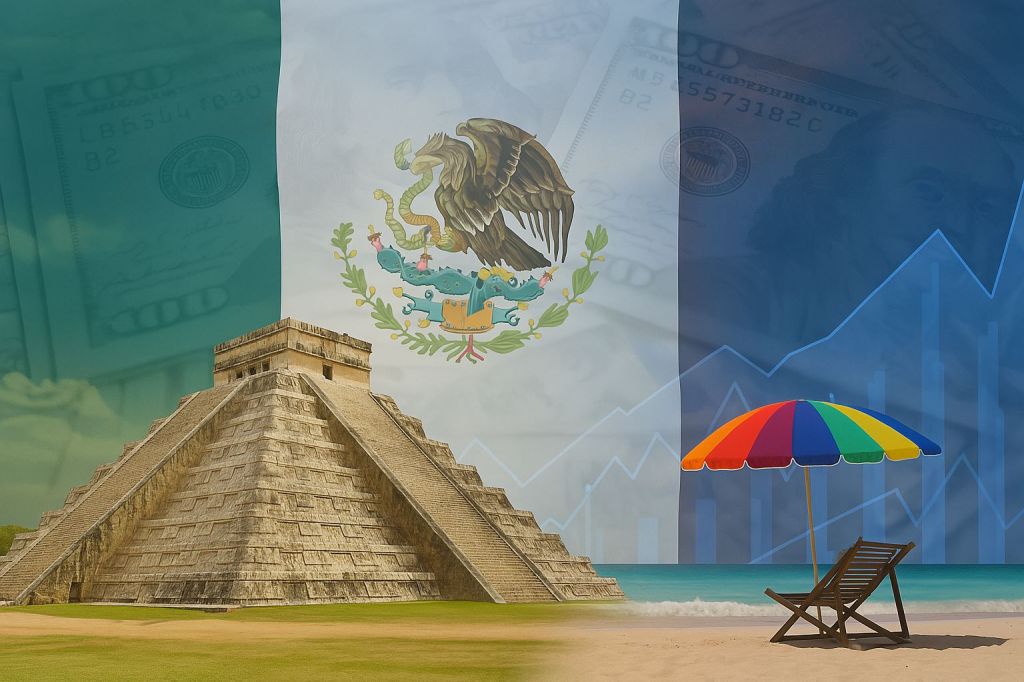
As of March 28, 2025, the Bank of Mexico released its weekly balance sheet report revealing nuanced changes in the country’s monetary landscape. The most notable developments included an increase in international reserves, a slight contraction in the monetary base, and intensified open market operations to manage liquidity. These figures, while technical on the surface, offer profound insight into the macroeconomic pulse of the nation and are particularly relevant when considered through the lens of the tourism industry and the shifting tides of global geopolitics.
Strengthening Reserves Amid Global Uncertainty
Mexico’s international reserves rose by $275 million USD during the final week of March, bringing the total to $237.01 billion USD. Since the beginning of 2025, the reserves have grown by over $8 billion USD. This growth is not merely a statistical footnote—it signals financial stability and resilience in a time when many emerging markets are experiencing capital outflows due to geopolitical risks, tightening monetary policy in advanced economies, and currency volatility.
For Mexico, which remains heavily intertwined with global trade and tourism, a healthy reserve balance offers a crucial buffer. It ensures the ability to stabilize the peso in times of external shock, fund critical imports, and sustain investor confidence. In the context of tourism, particularly international arrivals, strong reserves provide indirect support for marketing campaigns, airport infrastructure, and promotional strategies funded by the federal government or backed by the central bank’s credibility.
Liquidity Adjustments and Public Spending: Subtle Impacts on Tourism
The report also highlighted a reduction in the monetary base by 2,870 million pesos. This contraction reflects a reduced public demand for cash and efforts by the Bank of Mexico to neutralize excessive liquidity through open market operations. In total, the Bank extracted over 69 billion pesos in liquidity, partially due to withdrawals by the Federal Treasury and reduced cash usage by the public.
Such monetary tightening, while necessary to curb inflation and preserve financial order, can signal caution for the domestic tourism sector. Reduced liquidity may lead to lower short-term consumption, which includes discretionary spending like domestic travel, hospitality, and leisure services. However, it also indicates confidence in the central bank’s ability to manage inflation, which is vital for long-term planning and investment by tourism operators.
Tourism Industry: A Sector on the Frontlines of Resilience
Mexico’s tourism sector has long been a pillar of economic resilience, contributing nearly 8% to GDP pre-pandemic. In recent years, especially as travelers sought alternatives to long-haul destinations, Mexico has benefited from its proximity to the U.S. and a diversified offering—from beach resorts in Quintana Roo to cultural tourism in Oaxaca and adventure travel in Baja California.
The current monetary stability supports this recovery. With a stable peso and healthy reserves, the government and private sector are better positioned to invest in tourism infrastructure, training, and international promotion. Moreover, strategic reserve management can keep exchange rates stable, encouraging predictable pricing for international travelers—an increasingly important factor as price sensitivity rises globally.
Global Geopolitics: A Double-Edged Sword for Tourism
However, Mexico’s economic and tourism outlook does not exist in a vacuum. The international arena is fraught with tensions: the ongoing trade frictions between China and the U.S., energy instability fueled by continued conflict in Eastern Europe, and disruptions in the Red Sea affecting global supply chains. These factors contribute to market volatility and can cause rapid shifts in capital flows—putting pressure on central banks like Mexico’s to maintain defensive postures.
For tourism, geopolitics poses both risks and opportunities. On one hand, heightened tensions and safety concerns elsewhere may redirect travelers toward perceived “safe havens” like Mexico, particularly for North American tourists. On the other, global inflationary pressures and weaker consumer confidence in key outbound markets (e.g., Europe, Asia) could dampen demand.
Mexico’s central bank, by maintaining conservative monetary management and reinforcing its reserve position, sends a signal of macroeconomic maturity. This is critical not only for economic stakeholders but also for international tourism boards and partners looking to co-invest in campaigns that promote Mexico as a destination in times of uncertainty.
Conclusion: Navigating Complexity with Prudence
The March 28, 2025 balance sheet from the Bank of Mexico, while technical in nature, reflects an economy carefully navigating internal needs and external shocks. For the tourism industry, the broader message is clear: Mexico’s macroeconomic framework is holding firm, which is a prerequisite for sustained tourism growth. In a fragmented and unpredictable world, the alignment of monetary prudence with tourism development efforts may very well be Mexico’s greatest competitive advantage in the global travel economy.
 Jorge Zárate