Airline Economics

Jorge Zárate , 31 August 2025


Introduction

Airline economics has always stood at the intersection of industrial organization, public policy, and consumer behavior. Unlike many other industries, airlines operate in an environment where costs are highly fixed, demand is highly variable, and competition is tightly intertwined with government regulation and international politics. This makes aviation both a business and a public utility, subject to rules, subsidies, and geopolitical influences that do not apply with the same intensity to other sectors. In 2025, the complexity of the industry has only intensified.

On the one hand, demand for air travel remains robust, with global traffic reaching new records in 2024 and maintaining positive growth into 2025 (IATA, 2025). At the same time, the sector faces unprecedented constraints: aircraft production delays, engine reliability issues, sustainable aviation fuel (SAF) mandates, and heightened geopolitical uncertainty in key corridors such as Eastern Europe and the Middle East. Meanwhile, the rise of digital retailing and IATA’s New Distribution Capability (NDC) is reshaping how airlines interact with passengers and intermediaries, shifting bargaining power away from global distribution systems and toward airlines themselves.

The purpose of this article is to provide a comprehensive economic analysis of the airline industry in 2025 by revisiting classical concepts such as demand elasticity, yield management, and cross-subsidization, while integrating current issues such as NDC distribution strategies, sustainability mandates, and geopolitical constraints. To clarify these issues, mathematical reasoning is introduced where necessary, grounding the discussion in economic principles rather than anecdotes. The goal is to demonstrate that beneath the headlines, the logic of airline economics continues to explain why airlines price as they do, how they allocate scarce capacity, and what strategic options they will pursue in a volatile world.


Demand Elasticities and Mathematical Reasoning

Passenger demand in aviation has always been distinguished by its dual nature: a mixture of price-sensitive leisure travelers and time-sensitive business travelers. This heterogeneity is not incidental; it is central to the way airlines structure their pricing strategies. Economic analysis captures this through elasticity formulas. Price elasticity of demand (Ep) is calculated as the percentage change in quantity demanded divided by the percentage change in price. In leisure markets, Ep is typically greater than 1 in absolute value, indicating elastic demand, while in business markets Ep is less than 1, signaling inelastic demand (O’Connor, 2001).

Ep = %ΔQ / %ΔP

The implications of these values are profound. For leisure travelers, a 10% decrease in fares might lead to a 20% increase in bookings, while for business travelers the same fare cut might generate only a 5% increase. This divergence justifies differentiated fare structures and underlines why uniform pricing is economically irrational in air transport. Airlines would either price themselves out of the leisure market by charging too high a fare or leave money on the table by undercharging business travelers with inelastic demand.

Another key concept is the tapering of fares with distance. Long-haul fares typically exhibit lower costs per mile compared to short-haul services. Part of this reflects fixed costs spread over longer distances, but elasticity also plays a role: demand for long-haul markets is less sensitive to price increases on a per-mile basis, allowing airlines to price more competitively while still sustaining profitability (O’Connor, 2001). These mathematical insights are more than academic; they explain the basic pricing logic that continues to govern airline networks in 2025.


Revenue Management: Yield, Capacity Controls, and Segmentation

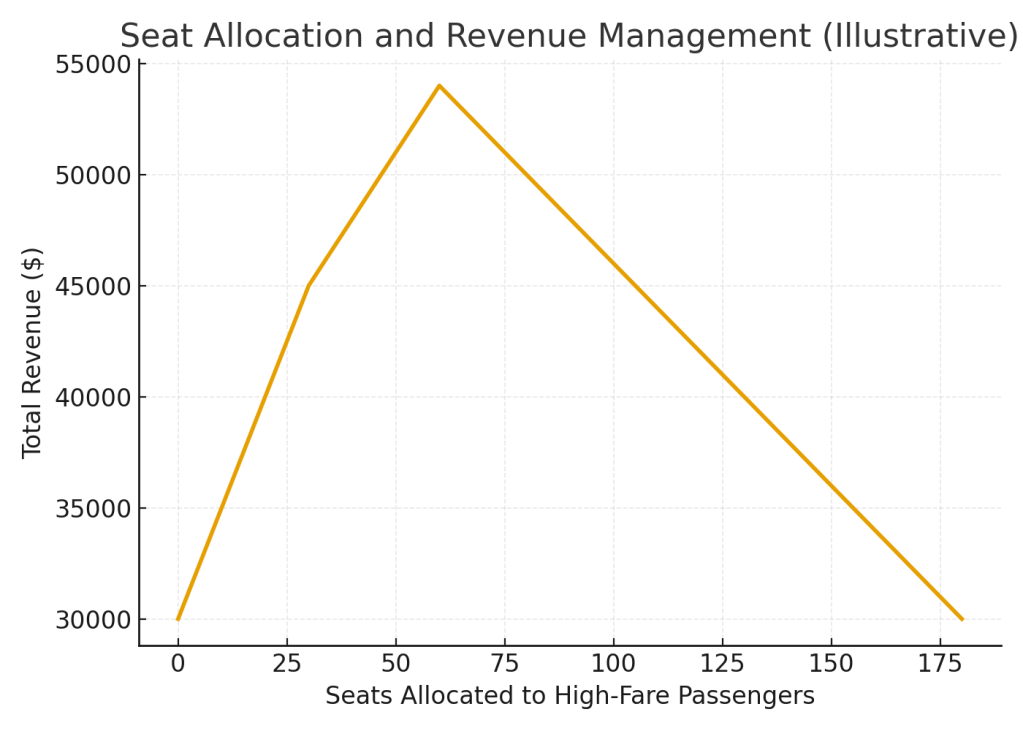
The core of airline economics in the post-deregulation era is revenue management, sometimes referred to as yield management. Yield itself is defined as the revenue earned per revenue passenger-mile (RPM), a simple ratio that masks the complexity behind its calculation. The real challenge for airlines is not simply to fill seats but to ensure that each seat is sold at the optimal fare class so that total revenue is maximized.

Yield is defined as:

Yield = Total Revenue ÷ Revenue Passenger-Miles (RPMs)

To achieve this, airlines employ a suite of techniques including overbooking, capacity-controlled discount fares, peak-load pricing, and dynamic inventory allocation. The optimization problem can be expressed mathematically as:

Max Σ (pi × qi), subject to Σ qi ≤ Q

where pi is the fare, qi is the number of tickets sold at that fare, and Q is aircraft capacity.

This is the foundation of yield management: overbooking, dynamic pricing, and controlling how many seats are sold at each fare level. In 2025, with constrained capacity, these techniques are more crucial than ever.

This reliance on yield management explains why consumers often encounter large price differences for the same seat depending on when and how they book. Far from being arbitrary, these differences are grounded in models of consumer behavior and optimization under constraints. What appears as pricing opacity is in fact a systematic application of microeconomic principles tailored to the realities of air transport.

Ancillary Revenues: Expanding the Revenue Base

A defining characteristic of the modern airline business is the expansion of ancillary revenues, which IATA estimates will reach $144 billion in 2025 (IATA, 2025). Ancillary revenues include baggage fees, seat upgrades, onboard sales, and bundled offers. While critics often dismiss these as “hidden fees,” they are in fact the logical extension of yield management. By unbundling services and charging separately for them, airlines can better segment willingness to pay among different passenger types.

From an economic perspective, ancillary revenues represent a method of consumer surplus extraction. Traditional fare models left value uncaptured because a one-size-fits-all ticket did not account for the varying preferences of travelers. By offering differentiated services at multiple price points, airlines maximize revenue per passenger rather than per seat alone. In 2025, this diversification provides resilience against fluctuating base fares and strengthens overall financial stability.


NDC Distribution: Reshaping Market Access

Perhaps the most important distribution development in recent years is IATA’s New Distribution Capability (NDC). The legacy system of fare distribution relied on global distribution systems (GDS) and EDIFACT protocols, which restricted airlines to filing static fares and limited their ability to personalize offers. NDC, by contrast, uses XML-based APIs that allow airlines to display dynamic fares, bundles, and ancillaries directly to agents and consumers (IATA, 2024).

Economically, this shift alters the distribution cost structure and changes the bargaining power dynamics between airlines and intermediaries. Airlines save on GDS fees, gain greater control over their product presentation, and can personalize offers based on customer profiles. NDC also enables airlines to transition from pure seat inventory management to total offer optimization, a shift that mirrors broader trends in digital retailing.

In 2025, the carriers that have embraced NDC are better positioned to capture incremental revenue and protect yields in a supply-constrained environment. Conversely, those that lag in implementation risk commoditization, as their products continue to be displayed in generic formats that limit differentiation.


Cargo: Mathematical and Strategic Considerations

Cargo remains an essential but often overlooked component of airline economics. While passenger services dominate revenues, cargo provides both diversification and resilience. In 2025, air cargo demand has grown significantly due to supply chain disruptions in ocean shipping and the expansion of e-commerce logistics.

The economics of cargo, however, are constrained by structural issues. The cube-out problem occurs when volume rather than weight limits the load factor. Airlines account for this using dimensional weight pricing:

Chargeable Weight = max(Actual Weight, Volume ÷ Dimensional Factor)

This pricing model ensures that shippers of low-density goods pay rates aligned with the economic use of space. Incentives for containerization and density optimization also reflect the principle of aligning customer behavior with airline cost structures (O’Connor, 2001). While cargo’s share of total airline revenues fluctuates, its strategic role as a stabilizer has been reinforced in 2025.


Sustainability as a Cost Function

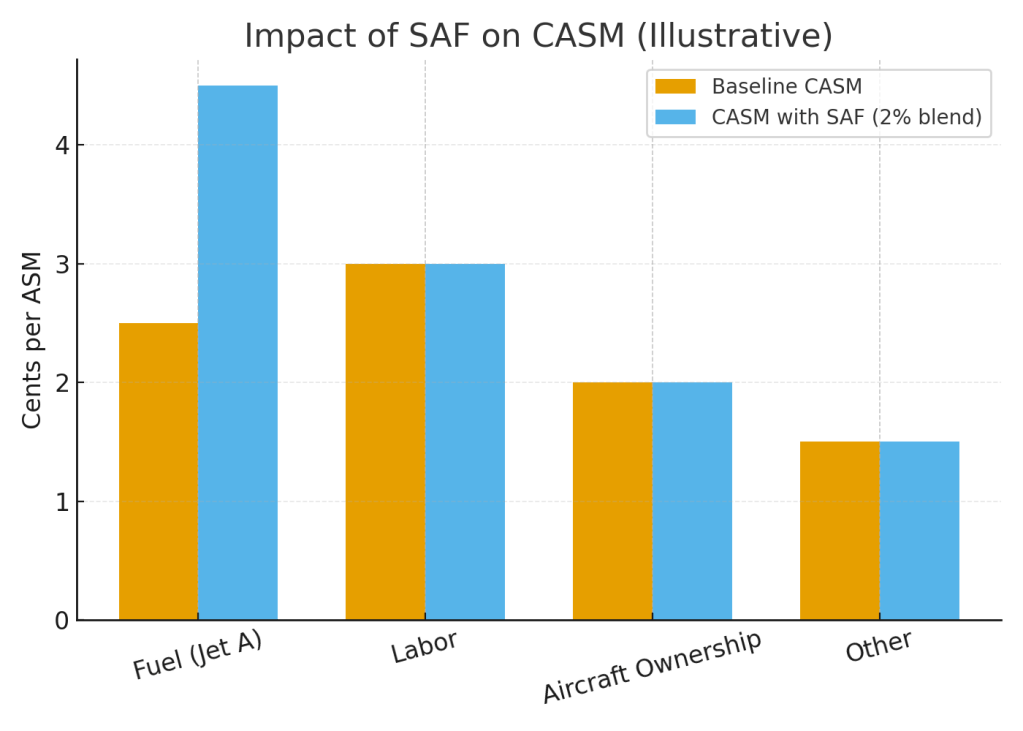
Sustainability is no longer an optional public relations measure but a binding cost input. From January 2025, the European Union’s ReFuelEU Aviation mandate requires airlines to use a 2% blend of sustainable aviation fuel (SAF), with higher requirements to follow (European Commission, 2023). Since SAF costs two to three times more than conventional jet fuel, this has a direct impact on the cost per available seat mile (CASM):

CASM = (Cfuel + Clabor + Caircraft + Cother) ÷ ASM

Airlines face a strategic choice: absorb the cost, pass it through to consumers, or lock in long-term SAF contracts to mitigate volatility. The differential pace of SAF adoption across regions also creates competitive disparities, with carriers based in SAF-rich jurisdictions better positioned to meet both regulatory and corporate customer requirements.

Geopolitical Constraints

The geopolitical context continues to exert a powerful influence on airline economics. The closure of Russian airspace since 2022 forces many Western carriers to reroute, increasing flight times, fuel consumption, and crew costs. Instability in the Middle East has further complicated traffic flows and reduced connectivity, while trade disputes introduce tariffs that raise the cost of aircraft, parts, and maintenance.

These are not temporary shocks but permanent structural variables in airline planning. Airlines now routinely incorporate geopolitical risk into their network optimization models, alongside demand forecasts and fuel prices. In 2025, geopolitics is as much a determinant of airline economics as traditional supply and demand dynamics.


Profitability and Outlook

Despite these constraints, the industry remains profitable. IATA projects net profits of approximately $36 billion in 2025, reflecting disciplined capacity management, robust ancillary revenues, and strong demand (IATA, 2025). This profitability is not a short-term anomaly but the outcome of airlines systematically applying economic principles: elasticity-based pricing, yield management, distribution control, and diversified revenue streams.


Conclusion: Strategic Outlook

The analysis of airline economics in 2025 reveals that the principles articulated decades ago remain essential for understanding the industry today. Airlines succeed not by chasing growth at all costs but by optimizing under constraints—allocating limited capacity efficiently, differentiating fares by elasticity, and leveraging ancillary and cargo revenues to stabilize income. NDC distribution represents a technological leap that aligns with these economic imperatives, while sustainability mandates and geopolitical realities reshape the cost and competitive environment.

Looking forward, the most successful carriers will be those that treat economic fundamentals, regulatory constraints, and technological innovations as integrated components of strategy. Growth will increasingly be defined not by raw expansion but by disciplined optimization, careful segmentation, and adaptive planning in a volatile geopolitical world.


References

  • European Commission. (2023). ReFuelEU Aviation: Sustainable aviation fuels mandate. Brussels: European Commission.
  • International Air Transport Association (IATA). (2024). NDC Implementation Guide. Geneva: IATA.
  • International Air Transport Association (IATA). (2025). Economic performance of the airline industry: 2025 mid-year report. Geneva: IATA.
  • O’Connor, W. E. (2001). An introduction to airline economics (6th ed.). Westport, CT: Praeger.
Data Normalization

Jorge Zárate / 22 August 2025

Introduction: A Level Playing Field for Tourism Insights

Why Normalization Matters in Tourism Benchmarking.

In tourism benchmarking, numbers can be misleading if we don’t compare them properly. Large destinations often dominate the charts simply because of their scale, while smaller destinations with strong growth remain hidden. To make fair comparisons, we need a method that allows us to evaluate trends and patterns side by side.

This is where normalization comes in. By rescaling data to a common reference point, normalization allows destinations of any size to be compared on equal terms. For tourism boards, travel trade partners, and policymakers, this means clearer insights and smarter strategies.


What Is Normalization in Simple Terms?

Normalization is like putting data on the same scale. Imagine you want to compare:

  • Destination A: 2 million annual visitors
  • Destination B: 400,000 annual visitors

Raw numbers show A as five times bigger, but what if B is growing twice as fast? Without normalization, that growth trend is easy to miss.

By rescaling all values between 0 and 1, we highlight relative changes rather than absolute size. This shows whether each destination is going up, down, or staying stable, regardless of its original scale.


The Mathematics Behind Normalization

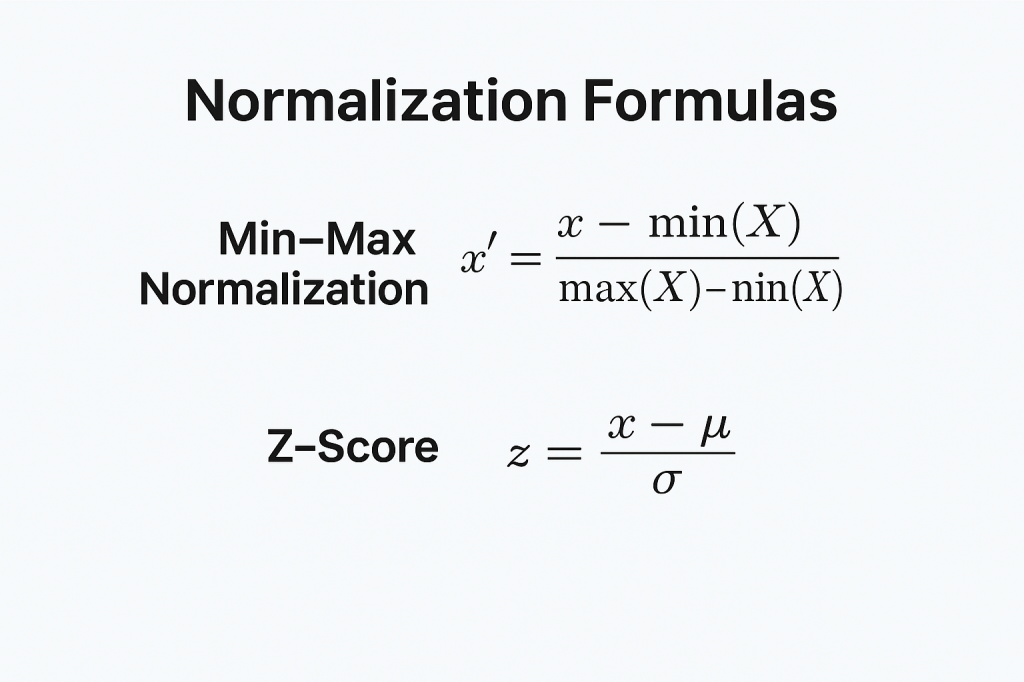
The most common technique used in benchmarking is Min–Max Normalization, which transforms data as follows:

Where:

  • XXX = Original value
  • XminX_{min}Xmin​ = Minimum observed value in the dataset
  • XmaxX_{max}Xmax​ = Maximum observed value in the dataset
  • X′X’X′ = Normalized value (always between 0 and 1)

This means the lowest point in your data becomes 0, the highest point becomes 1, and everything else falls in between.

In tourism terms:

  • If Destination A’s monthly Pax Count varies between 10,000 and 50,000, those values become 0 and 1.
  • A month with 30,000 visitors becomes (30,000−10,000)/(40,000)=0.5(30,000 – 10,000) / (40,000) = 0.5(30,000−10,000)/(40,000)=0.5.

Now we can plot Destination A and Destination B on the same chart, making their seasonal trends instantly comparable.


Why Tourism Needs Normalization

For tourism boards and trade partners, normalization is not just a mathematical trick. It is a decision-making tool that enables:

  1. Fair comparisons – Put large hubs and small emerging destinations side by side.
  2. Seasonality analysis – Identify common peaks and low periods across markets.
  3. Performance benchmarking – Compare ADR (Average Daily Rate), Pax Count, and Room Nights without size bias.
  4. Opportunity detection – Spot hidden growth opportunities that raw numbers conceal.

Illustrative Examples (Mock Data)

Let’s use three fictional destinations — Destination A, B, and C — and compare their Pax Count, Room Nights, and ADR.

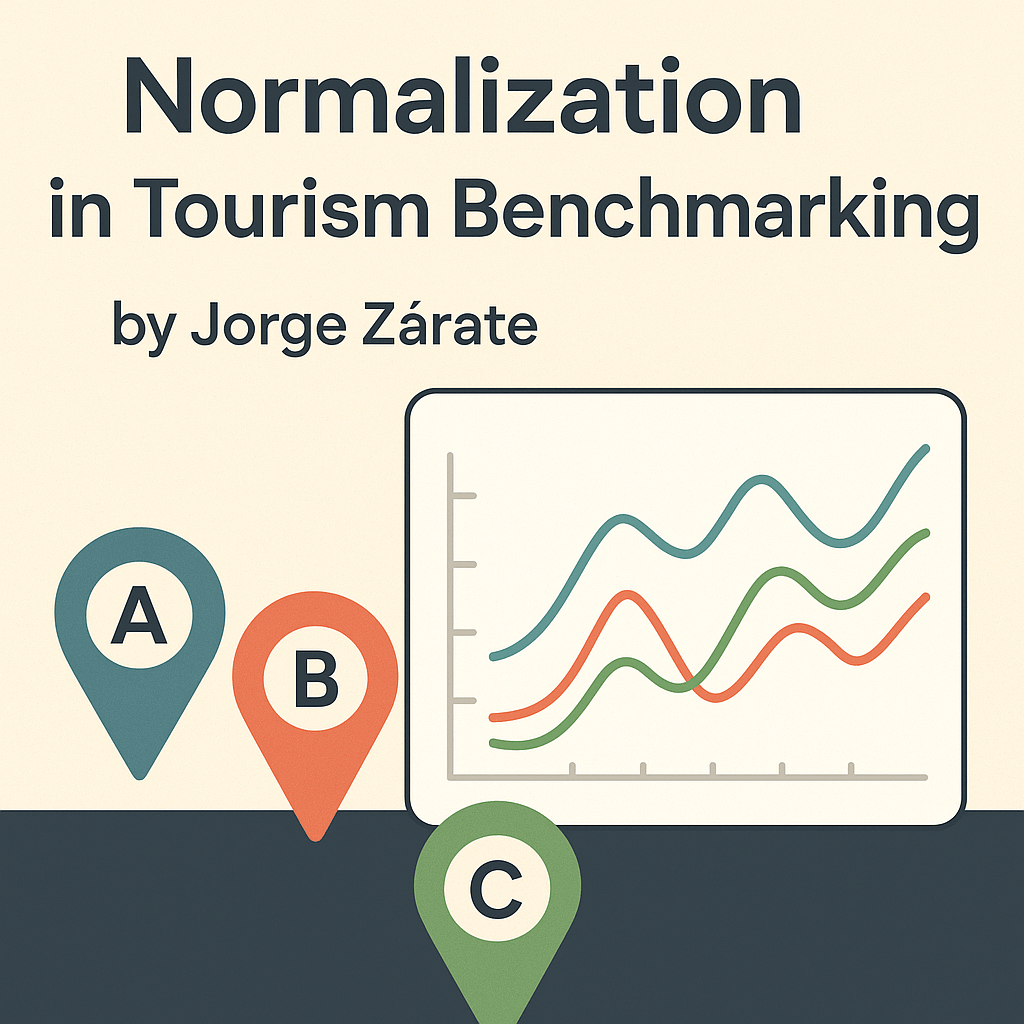
(Normalized Pax Count, Room Nights, ADR for Destinations A, B, C)

Insight from the line charts:
  • Destination A shows strong winter peaks.
  • Destination B remains stable year-round.
  • Destination C is small in volume but growing sharply in spring months.

These patterns become visible only after normalization.


Beyond Line Charts: Alternative Visualizations
  1. While line charts are the most common way to show normalized trends, there are other useful approaches:
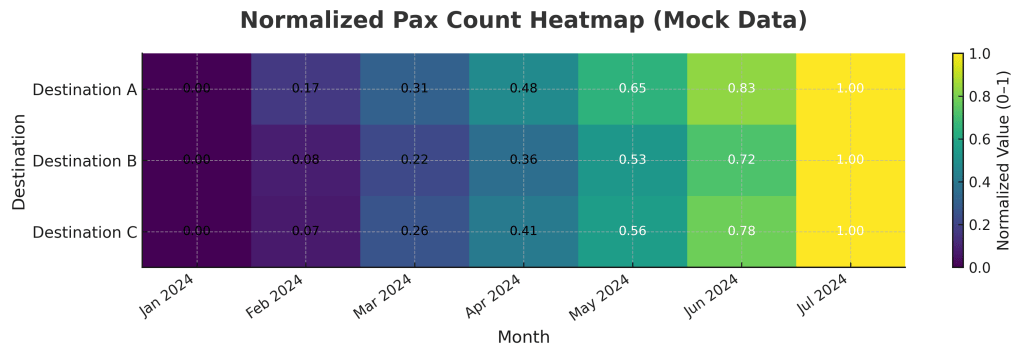
  2. Heatmaps – Represent seasonality across months and destinations in a grid format.
    • Rows = destinationsColumns = monthsColors = intensity (normalized value)
    This format makes it easy to see at a glance where peaks occur across multiple destinations.
  3. Scatter plots – Plot normalized ADR against normalized Pax Count to identify outliers (e.g., high ADR with low Pax).
  4. Stacked comparisons – Combine normalized Room Nights and ADR to reveal balance between demand and pricing strategy.

How Normalization Supports Strategic Decisions

For tourism boards, normalization means knowing whether their market is performing in line with peers. If one destination has the same normalized trend as a competitor, it may signal similar source markets or seasonal behavior.

For travel trade partners, normalization helps in:

  • Targeting campaigns to match seasonal demand.
  • Identifying destinations with rising ADR or growing Pax that justify new partnerships.
  • Benchmarking performance without letting size distort reality.

For policy and investment, normalization reveals long-term structural trends that raw numbers blur. A small but consistently rising destination might deserve infrastructure investment, even if today’s absolute numbers look modest.


Practical Example

Imagine Pax Count data for January to June:

  • Destination A: 50k → 70k
  • Destination B: 5k → 10k
  • Destination C: 15k → 25k

Raw data shows A as the giant. But after normalization:

  • A rises from 0.0 to 1.0 (seasonal surge)
  • B rises from 0.0 to 1.0 (relative doubling)
  • C rises from 0.0 to 1.0 (steady upward climb)

All three destinations now show comparable growth dynamics, regardless of their absolute size.


Conclusion: Clearer Vision for Smarter Tourism

Normalization gives tourism stakeholders a clearer, fairer, and more strategic view of data. Instead of being blinded by size, we see patterns, trends, and opportunities that might otherwise remain hidden in the noise of raw numbers. This refined perspective is invaluable in a competitive landscape where understanding nuances can differentiate success from failure. For destinations large and small, it creates a level playing field for benchmarking, allowing even the smallest establishments to identify their strengths and weaknesses relative to their rivals. And for tourism boards and travel trade partners, it provides insights that support smarter strategies, enabling them to tailor their approaches more effectively to meet the dynamic needs of travelers today. Furthermore, by leveraging these insights, stakeholders can anticipate shifts in consumer behavior, enhance collaboration across sectors, and ultimately drive more sustainable tourism development that benefits local communities and the industry alike.


Next Step: Smarter Decision-Making

If your organization wants to compare destinations fairly, uncover hidden growth, and align marketing strategies with true demand patterns, normalization can be a powerful tool in your benchmarking process. By systematically adjusting data points to account for variations in factors such as seasonality, market conditions, and consumer behavior, normalization enables a more accurate comparison across different destinations. This process allows you to not only identify potential areas of opportunity but also enhances your ability to make informed decisions. Furthermore, by utilizing this method, organizations can develop tailored marketing campaigns that resonate with their target audience, ultimately driving engagement and improving overall performance in competitive markets.

A Learning Organization

By Jorge Zárate – jorgezarate.net

Abstract

In today’s highly dynamic and service-driven travel and tourism industry, organizations must evolve beyond traditional operational models to remain competitive. This article explores the concept of a learning organization within the context of tourism, emphasizing how systematic learning at all levels, individual, team, and organizational, can lead to continuous innovation and strategic agility. Drawing from recent research and tourism-specific insights, it outlines how supportive environments, structured learning processes, and leadership alignment can help DMOs, tour operators, and hospitality brands thrive amid global disruptions. Key enablers such as digital capabilities, knowledge systems, and a shared vision are discussed, along with practical illustrations like tboholidays.com and VisitScotland. The article argues that building a learning organization in tourism is not a trend, but a vital strategy for resilience, growth, and transformation.

Building a Learning Organization in Travel & Tourism: Strategic Foundations for Innovation

What Is a Learning Organization?

The foundational concepts of learning organizations in this article are heavily inspired by the work of Burgelman, Christensen, and Wheelwright (2009), whose book *Strategic Management of Technology and Innovation* provides critical frameworks for understanding how firms can systematically manage innovation, strategy, and organizational learning. Their insights, particularly around aligning learning with corporate strategy and creating adaptive capabilities, form the basis for interpreting these principles in a tourism and service-sector context.

A learning organization is one that systematically facilitates learning at all levels, individual, team, and organizational, and continuously transforms itself as a result. In the context of strategic technology management in tourism, think online distribution, evolving traveler behaviors, and digital engagement, learning organizations align innovation with market dynamics and internal competencies. They move from reactive problem-solving to proactive service redesign, traveler personalization, and experience innovation.

One of the key transformations in modern tourism organizations is their ability to embrace real-time feedback, digital co-creation, and service agility (Buhalis & Sinarta, 2019). Smart tourism technologies are reshaping how destinations capture and use data, enabling a more responsive and personalized traveler experience (Gretzel et al., 2015). Learning organizations that operate within this digital ecosystem thrive by embedding continuous learning into both internal systems and external guest interactions.

Beyond digital adoption, cultivating a culture of learning is essential. A 2021 report from Harvard Business Review emphasizes that organizations with a strong learning culture outperform their peers in innovation and resilience (Harvard Business Review Analytic Services, 2021). In the tourism sector, this translates into empowered frontline staff, agile marketing teams, and data-informed decision-making structures.

Post-pandemic insights from McKinsey (2020) further underscore the need for adaptability in the travel and beauty sectors, where evolving consumer behavior forces companies to rethink strategies. This highlights the strategic value of learning organizations in anticipating and navigating such disruptions.

The Three Pillars of Learning Organizations in Tourism

David Garvin’s framework identifies three foundational pillars:

1. **Supportive Learning Environment**

Travel companies must foster a culture of psychological safety where staff feel empowered to test new itineraries, question legacy distribution models, and innovate in guest experience design without fear of failure. Psychological safety leads to better team learning behaviors, especially in service environments where customer-facing interactions are frequent.

2. **Concrete Learning Processes and Practices**

Learning is not a by-product of guest feedback; it must be actively cultivated. High-performing travel companies engage in systematic analysis of customer reviews, monitor booking trends, and test new product formats. Knowledge sharing platforms, such as CRM systems, destination knowledge bases, or cross-agency trainings, embed best practices and reduce siloed thinking across departments and source markets.

3. **Leadership That Reinforces Learning**

Tourism leaders, from DMO executives to hotel general managers, set the tone. In learning organizations, leadership is about modeling curiosity and openness, not just delivering occupancy rates or sales quotas. They must encourage collaboration between commercial, marketing, and operations teams and invest in platforms that promote learning.

From Single-Loop to Double-Loop Learning in Travel Firms

Chris Argyris and Donald Schön introduced a powerful distinction: single-loop learning involves making adjustments without questioning core assumptions, while double-loop learning challenges the underlying beliefs and strategies that govern actions. For example, responding to a seasonal booking drop with discounts might be single-loop learning. Re-evaluating source market segmentation or shifting to niche segments like luxury ecotourism reflects double-loop learning.

Balancing Exploration and Exploitation in the Tourism Ecosystem

James March emphasized the importance of balancing exploration (innovation, experimentation, new product development) with exploitation (efficiency, yield management, process optimization). Too much focus on traditional OTA or GDS bookings may limit diversification. Learning organizations institutionalize this balance by creating structures that support both, often referred to as ambidextrous organizations.

Tourism boards might run classic brand-awareness campaigns while also testing influencer-led storytelling and micro-campaigns for emerging segments. Tour operators may offer core packages while experimenting with AI-driven itinerary builders.

Enablers of Organizational Learning in Travel & Tourism

Beyond culture and leadership, certain structural capabilities support learning:

Absorptive capacity: The ability to recognize, assimilate, and apply global travel trends or competitive intelligence is vital in an interconnected tourism market.
Knowledge management systems: Centralized destination and product knowledge repositories accelerate onboarding and sales training.
Shared vision: A clear sense of mission (e.g., sustainable tourism, inclusive experiences) aligns learning with strategic branding.

Tourism firms must embed these learning enablers into their onboarding, training, marketing analytics, and product development routines.

Why This Matters for Travel Innovation and Destination Strategy

The tourism industry is deeply affected by global forces, climate change, traveler values, digital disruption, geopolitical shifts, and traditional sources of competitive advantage such as location or pricing are no longer enough. Instead, strategic agility and organizational learning have emerged as the new frontiers. Destination managers, hotels, and tour operators that adapt faster can capitalize on trends like remote work travel, regenerative tourism, or travel-as-experience.

Innovation in tourism is not a one-time act but a repeatable process. Learning organizations build the capabilities and mindsets to make innovation systemic. From Booking.com’s A/B testing to VisitScotland’s trade training academies, travel leaders are using learning as a strategic asset.

Final Thoughts

Building a learning organization in the travel and tourism industry is no longer optional. It’s a strategic imperative. It requires leaders who embrace experimentation, organizations that invest in knowledge systems, and teams that feel empowered to improve the guest journey from inspiration to experience. Strategy, innovation, and learning must be viewed as an integrated whole.

Tourism companies that embrace this mindset not only unlock performance gains but position themselves as resilient, relevant, and truly guest-centric brands in a volatile world.

References

Burgelman, R. A., Christensen, C. M., & Wheelwright, S. C. (2009). *Strategic management of technology and innovation* (5th ed.). McGraw-Hill Education.

Buhalis, D., & Sinarta, Y. (2019). Real-time co-creation and nowness service: Lessons from tourism and hospitality. *Journal of Travel Research*, 58(3), 398–411.

Gretzel, U., Sigala, M., Xiang, Z., & Koo, C. (2015). Smart tourism: Foundations and developments. *Electronic Markets*, 25, 179–188. https://doi.org/10.1007/s12525-015-0196-8

Harvard Business Review Analytic Services. (2021). *Creating a culture of continuous learning: The key to competitive advantage*. Harvard Business Publishing.

McKinsey & Company. (2020). *How COVID-19 is changing the world of beauty and travel*.

Navío-Marco, J., Ruiz-Gómez, L. M., & Sevilla-Sevilla, C. (2020). Progress in information technology and tourism management: 30 years on and 20 years after the Internet. *Tourism Management Perspectives*, 33, 100585. https://doi.org/10.1016/j.tmp.2019.100585

OECD. (2022). *Preparing tourism businesses for the digital future*. OECD Tourism Trends and Policies.

Pencarelli, T. (2020). The digital revolution in the travel and tourism industry. *Information*, 11(4), 1–17. https://doi.org/10.3390/info11040196

Sigala, M. (2018). Social media and customer engagement in the context of collaborative value co-creation in tourism. *Tourism Management*, 67, 44–56.

UNWTO. (2023). *Tourism and Innovation: Fostering sustainable development through learning*. World Tourism Organization.

WEF. (2022). *The Travel & Tourism Development Index 2021: Rebuilding for a sustainable and resilient future*. World Economic Forum.

Building and Maintaining Institutions in Travel and Tourism: The Role of Destination Marketing and Trade Promotion

“Neoclassical government building representing institutional strength.”

Jorge Zárate

Introduction


In the modern global economy, the travel and tourism industries play a crucial role in fostering economic growth, cultural exchange, and international cooperation. As global connectivity increases and competition among destinations intensifies, the need for well-structured and reliable institutions becomes paramount. Institutions—understood as the set of rules, norms, and structures that guide behavior in a society—serve as the backbone for governance, education, infrastructure, and commerce within the tourism sector.

In this essay, I explore how institutions can be built and sustained within travel and tourism, with a particular focus on destination marketing and promotion towards trade. By examining institutional design, governance frameworks, stakeholder collaboration, and promotional strategies, I aim to provide a comprehensive guide to strengthening tourism systems that are resilient, inclusive, and economically impactful.

Understanding Institutions: Foundations and Pillars

Before exploring tourism-specific institutions, it is important to understand the broader concept of institutions as described in institutional theory. According to W. Richard Scott (2001), institutions are multifaceted, durable social structures made up of symbolic elements, social activities, and material resources. They exert authority over behavior by establishing norms and expectations that persist over time.

Scott identifies three key pillars of institutions that support their structure and influence:

Regulative Pillar: This pillar emphasizes rules, laws, and sanctions. Institutions under this pillar enforce compliance through formal mechanisms like legislation, contracts, and regulation.

Normative Pillar: This pillar includes values and norms. It shapes what is considered appropriate and acceptable behavior in a society or sector. In tourism, this could involve cultural etiquette, professional ethics, and standards of service.

Cultural-Cognitive Pillar: This reflects shared understandings, mental models, and taken-for-granted beliefs. It influences how individuals perceive and interpret their social environment. In tourism, for example, it could shape how locals perceive the role of visitors and vice versa.

Destination Marketing Organizations (DMOs) are specialized institutions tasked with brand development, trade engagement, and promotional strategy. Their effectiveness depends on structured planning, digital investment, and stakeholder collaboration. These organizations play a vital role in positioning destinations competitively in the global market.

These pillars are not isolated but interdependent, working together to provide stability and meaning to institutional life. They also serve as a framework for evaluating the strength and function of institutions across all sectors, including travel and tourism. Recognizing this foundation allows me to better analyze how tourism-related institutions can be designed, promoted, and sustained in both formal and informal ways.

The Foundation of Institutions in Tourism

Tourism institutions encompass a range of regulatory, educational, cultural, and economic entities that support and regulate the industry. These include national tourism boards, local destination management organizations (DMOs), ministries of tourism, accreditation agencies, and trade associations. Each of these plays a role in structuring the tourism landscape, ensuring the implementation of standards, and driving coordinated actions across public and private sectors.

Institutions in tourism are typically built through a mix of legislative action, policy development, stakeholder input, and international cooperation. For instance, national tourism strategies often establish the legal and policy frameworks for tourism promotion and sustainability. Local DMOs may arise through partnerships between municipalities and private businesses, tasked with executing marketing and development plans. Additionally, institutions benefit from alignment with global standards, such as those set by the World Tourism Organization (UNWTO, 2022), which enhance credibility and international collaboration.

Governance and Regulatory Frameworks

Strong governance is essential to the functioning of institutions in the tourism sector. Effective governance involves clear mandates, transparency, accountability mechanisms, and inclusive participation from diverse stakeholders. Tourism governance structures may include public agencies, advisory councils, and inter-ministerial committees that facilitate coordination between sectors such as transportation, culture, environment, and commerce.

Key elements for successful tourism governance include:

Legal clarity: Well-defined laws and regulations governing land use, visas, business licensing, and tourist behavior.

Institutional coordination: Mechanisms for communication and cooperation among tourism-related agencies and departments.

Public-private partnerships: Collaborative arrangements between governments and industry actors to pool resources, share risks, and innovate solutions.

Community involvement: Engaging local populations in tourism planning to ensure cultural sensitivity, equity, and long-term support.

Countries like Costa Rica and New Zealand have excelled in tourism governance by creating integrated policy frameworks that prioritize sustainability, local benefit, and long-term planning (Dredge & Jenkins, 2007).

The Role of Education and Capacity Building

Education is a critical component in building effective tourism institutions. By establishing educational institutions and training programs, destinations can develop a skilled workforce equipped to meet the demands of a dynamic industry. Universities, technical colleges, and tourism academies play a pivotal role in shaping the competencies of tourism professionals, from hospitality management to digital marketing and eco-tourism.

In addition to formal education, institutions must support ongoing professional development and certification. Programs such as tour guide accreditation, sustainability training, and crisis management workshops help maintain quality standards and adapt to emerging trends. Capacity building also involves empowering institutions themselves through knowledge-sharing, data systems, and institutional learning.

For example, I have seen how the TBO Academy model integrates trade-focused learning with market intelligence to equip travel agents and tourism boards with the skills and data they need to succeed. Such educational investments strengthen not only human capital but also institutional resilience.

Cultural and Environmental Institutions

Cultural institutions—such as museums, heritage boards, and arts councils—play a key role in preserving and promoting the identity of destinations. These institutions contribute to destination branding, storytelling, and visitor engagement. Moreover, they ensure that tourism does not dilute local heritage but rather becomes a vehicle for cultural exchange and preservation.

Environmental institutions, including parks services and conservation authorities, are equally essential. They safeguard natural resources, manage protected areas, and enforce sustainable tourism practices. When institutional frameworks for environment and tourism align, destinations can offer high-quality experiences that balance ecological integrity with economic gain (Eagles et al., 2002).

For instance, Galápagos National Park in Ecuador operates under strict environmental regulations while generating significant tourism revenue. The synergy between conservation institutions and tourism management provides a replicable model for other biodiversity-rich destinations.

Institutions of Culture, Behaviors and Best Practices

A fundamental yet often under-explored dimension of institutional development in tourism involves the norms, behaviors, and shared best practices that guide how stakeholders interact and collaborate. Institutions are not only about formal structures and laws but also about the informal rules that shape expectations and social practices. These informal institutions—which include culture, ethics, professional behavior, and mutual understanding—are key to building a robust and sustainable tourism industry.

Culture represents one of the most resilient institutional pillars: it embodies collective behaviors, traditions, and expectations that persist through time. Institutions stabilize and reproduce expected social behavior. In tourism, this cultural framework guides how destinations engage with visitors, how service quality is maintained, and how communities interact with the industry.

Behaviors as Institutional Patterns
Shared behaviors, such as hospitality etiquette, guest service standards, and community interactions, often evolve into institution-like patterns that define the essence of a destination. For example, Japan’s culture of hospitality (omotenashi) is so deeply institutionalized that it permeates every level of tourism service delivery.

Best Practices as Reinforcing Mechanisms
When standardized and widely adopted, best practices reinforce institutional values such as quality, respect, inclusivity, and sustainability:

Codes of conduct for operators and guides

Responsible visitor campaigns

Institutionalized feedback from tourists

Sustainability certifications


These practices contribute to predictability and trust—core features of institutions.

Designing and Implementing Institutions in Promotion from a Travel Point of Sale Framework

Beyond traditional destination marketing institutions, a modern approach must address the institutional design at the very point where travel is sold: the frontlines of travel agencies, online booking platforms, tourism fairs, and B2B trade ecosystems. These transactional nodes are where knowledge, creativity, and innovation must be institutionally embedded.

Strategic Design Elements:

Knowledge-Driven Structures: Institutions must collect, analyze, and leverage big data, market trends, and behavioral analytics to inform every promotional decision. This knowledge base becomes the institutional memory that guides adaptive strategies.

Creative Infrastructure: Institutional frameworks should provide structural support for innovation. This includes funding mechanisms, collaborative networks, and sandbox environments for prototyping campaigns, itineraries, and interactive technologies.

Innovation Governance: Appointing innovation champions or institutional innovation boards can institutionalize the creative process and ensure continuous evolution of promotional methods.


Implementation Methods at the Travel Point of Sale:

Standardized Trade Toolkits: Institutions should create branded toolkits that travel agents, wholesalers, and OTAs can adopt seamlessly. These toolkits include brand guidelines, promotional assets, onboarding materials, and real-time support services.

Digital Platforms with Embedded Intelligence: The integration of AI-driven recommender systems, dynamic packaging, and sentiment analysis dashboards within booking platforms enhances the promotional capacity directly at the POS.

Co-Marketing Agreements: Institutionalize co-branded marketing efforts between destinations, DMCs, and retail agencies through shared funding, joint KPIs, and synchronized calendars. This aligns the incentives of all actors involved.

Learning Ecosystems: Create continuous learning environments linked to booking interfaces. For instance, embedding micro-learning modules or pop-up destination tips within agent dashboards builds knowledge capital in real time.

Knowledge Hubs: Tourism institutions should develop centralized knowledge hubs that serve as repositories for best practices, innovation cases, and performance data, accessible to all promotional actors.


Institutionalizing Feedback and Adaptation:

Implement feedback loops through NPS (Net Promoter Score) systems, agent surveys, and user-generated content analysis. Institutional structures must be responsive, allowing for campaign recalibration based on real-time insights.

Establish advisory boards comprising travel agents, DMCs, trade buyers, and tech providers to ensure grounded implementation of institutional strategies.


Example:

A Latin American B2B Innovation Council formed by public tourism boards and private consortia could coordinate innovation in promotion across the region. With rotating leadership, a shared knowledge portal, and joint investment funds, this institution could reshape how the region engages global travel trade, combining sales intelligence with creative storytelling.

Destination Marketing Institutions

Core Functions of DMOs Include:

Brand Development: Crafting a unique and authentic image of the destination that resonates with both domestic and international travelers.

Market Segmentation: Identifying and targeting high-value visitor segments through research-driven strategy.

Trade Engagement: Partnering with tour operators, airlines, travel agents, and OTAs to integrate the destination into travel packages and global distribution networks.

Event Promotion: Leveraging festivals, conventions, cultural expos, and sports events to attract specific types of travelers.

Content and Storytelling: Creating compelling multimedia narratives that highlight the destination’s values, culture, and experiences across digital and traditional platforms.

Countries with strong DMOs, such as Tourism Australia and VisitScotland, demonstrate how coordinated branding and trade engagement translate into sustained tourism growth. These institutions often work hand-in-hand with government agencies, private businesses, and community groups to ensure alignment between promotional strategies and broader tourism goals.

DMOs also play a central role in crisis communication, sustainability initiatives, and destination stewardship—emphasizing their evolving function beyond pure marketing into long-term destination management.

“Traveler overlooking a historic coastal city at sunset, reflecting global exploration.”

Promoting Trade through Tourism Institutions

Tourism institutions play a pivotal role in facilitating and enhancing trade by acting as conduits between local producers and international markets. Their functions extend beyond attracting visitors—they also enable economic development by linking tourism with export industries, investment opportunities, and international collaboration.

Key Trade-Promoting Functions:

Market Access Facilitation: Institutions organize and participate in international trade fairs and exhibitions, giving local businesses exposure to global buyers and investors.

Capacity Building: Training programs help small tourism enterprises meet international standards, fostering innovation and readiness for cross-border trade.

Policy Advocacy: Tourism institutions advocate for streamlined visa processes, improved customs procedures, and bilateral tourism agreements that lower trade barriers.

Product Development and Diversification: By promoting local culture, cuisine, and experiences, institutions help diversify the national export portfolio through niche tourism products like gastronomy, wellness, and ecotourism.

Real-World Examples:

United States: The U.S. International Trade Administration supports the tourism industry through the National Travel and Tourism Office (NTTO), which offers data, insights, and matchmaking for trade expansion.

Spain: Turespaña actively collaborates with autonomous communities and the private sector to position Spanish tourism offerings globally, often linked with exports of wine, fashion, and design.

France: Atout France partners with tourism boards and export promotion agencies to elevate French culture and regional industries through experiential travel.

Challenges Faced by Tourism Institutions:

Budget Constraints: Limited funding restricts the scope of global outreach and innovation. For example, several national tourism boards have scaled back participation in major trade events due to resource cuts.

Fragmentation: A lack of coordination among local, regional, and national tourism entities can result in duplicated efforts or inconsistent messaging.

Rapid Market Changes: Institutions must adapt to evolving traveler preferences, technological shifts, and geopolitical disruptions that affect both travel and trade flows.

Recommendations:

Secure Sustainable Funding: Blended finance models—public, private, and international—can provide long-term resources for promotion and innovation.

Strengthen Institutional Partnerships: Align tourism boards with chambers of commerce, export councils, and trade ministries to deliver unified messages abroad.

Leverage Data and AI: Institutions should use predictive analytics to anticipate demand trends and personalize business matchmaking in trade forums.

By strategically aligning tourism promotion with trade development goals, institutions not only boost visitor arrivals but also catalyze investment, cultural diplomacy, and sustainable economic diversification.

My Final Thoughts

Institutions are the invisible scaffolding that supports the visible success of tourism destinations. From visa regulations and environmental protection to destination branding and trade engagement, institutions shape every aspect of the tourism experience. Without them, the tourism sector would lack direction, cohesion, and the capacity to grow sustainably.

Building and maintaining these institutions requires strategic vision, committed leadership, and multi-stakeholder collaboration. It demands the integration of formal rules with shared values and adaptable behaviors. It also calls for investments in human capital, digital infrastructure, and cross-border partnerships.

As the tourism industry recovers from global shocks and enters a new era of digital transformation and sustainability, institutional strength will be the determining factor for long-term success. Institutions must evolve with emerging traveler expectations, environmental challenges, and geopolitical shifts.

By aligning destination marketing with trade promotion and ensuring robust institutional frameworks—rooted in regulation, norms, and shared cognition—I believe destinations can position themselves as competitive, inclusive, and resilient players in the global tourism landscape.

Tourism is more than leisure. It is a platform for economic empowerment, cultural dialogue, and shared prosperity. Its institutions must reflect that.

References

Dredge, D., & Jenkins, J. (2007). Tourism Planning and Policy. John Wiley & Sons Australia.

Eagles, P. F. J., McCool, S. F., & Haynes, C. D. (2002). Sustainable Tourism in Protected Areas: Guidelines for Planning and Management. IUCN.

Scott, W. R. (2001). Institutions and Organizations. Sage Publications.

UNWTO. (2022). Tourism and the Sustainable Development Goals – Journey to 2030. World Tourism Organization.

Wang, Y., & Pizam, A. (2011). Destination Marketing and Management: Theories and Applications. CABI.