Opinion from a weekly Bank of Mexico’s account statement, 28 Mar, 2025.
By Jorge Zárate
As of March 28, 2025, the Bank of Mexico released its weekly balance sheet report revealing nuanced changes in the country’s monetary landscape. The most notable developments included an increase in international reserves, a slight contraction in the monetary base, and intensified open market operations to manage liquidity. These figures, while technical on the surface, offer profound insight into the macroeconomic pulse of the nation and are particularly relevant when considered through the lens of the tourism industry and the shifting tides of global geopolitics.
Strengthening Reserves Amid Global Uncertainty
Mexico’s international reserves rose by $275 million USD during the final week of March, bringing the total to $237.01 billion USD. Since the beginning of 2025, the reserves have grown by over $8 billion USD. This growth is not merely a statistical footnote—it signals financial stability and resilience in a time when many emerging markets are experiencing capital outflows due to geopolitical risks, tightening monetary policy in advanced economies, and currency volatility.
For Mexico, which remains heavily intertwined with global trade and tourism, a healthy reserve balance offers a crucial buffer. It ensures the ability to stabilize the peso in times of external shock, fund critical imports, and sustain investor confidence. In the context of tourism, particularly international arrivals, strong reserves provide indirect support for marketing campaigns, airport infrastructure, and promotional strategies funded by the federal government or backed by the central bank’s credibility.
Liquidity Adjustments and Public Spending: Subtle Impacts on Tourism
The report also highlighted a reduction in the monetary base by 2,870 million pesos. This contraction reflects a reduced public demand for cash and efforts by the Bank of Mexico to neutralize excessive liquidity through open market operations. In total, the Bank extracted over 69 billion pesos in liquidity, partially due to withdrawals by the Federal Treasury and reduced cash usage by the public.
Such monetary tightening, while necessary to curb inflation and preserve financial order, can signal caution for the domestic tourism sector. Reduced liquidity may lead to lower short-term consumption, which includes discretionary spending like domestic travel, hospitality, and leisure services. However, it also indicates confidence in the central bank’s ability to manage inflation, which is vital for long-term planning and investment by tourism operators.
Tourism Industry: A Sector on the Frontlines of Resilience
Mexico’s tourism sector has long been a pillar of economic resilience, contributing nearly 8% to GDP pre-pandemic. In recent years, especially as travelers sought alternatives to long-haul destinations, Mexico has benefited from its proximity to the U.S. and a diversified offering—from beach resorts in Quintana Roo to cultural tourism in Oaxaca and adventure travel in Baja California.
The current monetary stability supports this recovery. With a stable peso and healthy reserves, the government and private sector are better positioned to invest in tourism infrastructure, training, and international promotion. Moreover, strategic reserve management can keep exchange rates stable, encouraging predictable pricing for international travelers—an increasingly important factor as price sensitivity rises globally.
Global Geopolitics: A Double-Edged Sword for Tourism
However, Mexico’s economic and tourism outlook does not exist in a vacuum. The international arena is fraught with tensions: the ongoing trade frictions between China and the U.S., energy instability fueled by continued conflict in Eastern Europe, and disruptions in the Red Sea affecting global supply chains. These factors contribute to market volatility and can cause rapid shifts in capital flows—putting pressure on central banks like Mexico’s to maintain defensive postures.
For tourism, geopolitics poses both risks and opportunities. On one hand, heightened tensions and safety concerns elsewhere may redirect travelers toward perceived “safe havens” like Mexico, particularly for North American tourists. On the other, global inflationary pressures and weaker consumer confidence in key outbound markets (e.g., Europe, Asia) could dampen demand.
Mexico’s central bank, by maintaining conservative monetary management and reinforcing its reserve position, sends a signal of macroeconomic maturity. This is critical not only for economic stakeholders but also for international tourism boards and partners looking to co-invest in campaigns that promote Mexico as a destination in times of uncertainty.
Conclusion: Navigating Complexity with Prudence
The March 28, 2025 balance sheet from the Bank of Mexico, while technical in nature, reflects an economy carefully navigating internal needs and external shocks. For the tourism industry, the broader message is clear: Mexico’s macroeconomic framework is holding firm, which is a prerequisite for sustained tourism growth. In a fragmented and unpredictable world, the alignment of monetary prudence with tourism development efforts may very well be Mexico’s greatest competitive advantage in the global travel economy.
1. Тhe Trаgedy оf thе Сommоns: Тhis аrchetype describеs а situаtiоn whеrе individuаl users, аcting in thеir own self-interest, deрlete а shаred rеsourcе, even though it is not in аnyоne’s lоng-term interest fоr this tо hаppen. In tоurism, thе “commоns” could bе а nаturаl аttrаctiоn, suсh аs corаl reefs or nаtiоnаl pаrks, thаt is ovеrused by tоurists, leаding tо its degrаdаtiоn. For instаnce, thе Greаt Bаrrier Reef hаs exрerienced significаnt corаl bleаching due tо thе combinеd еffеcts оf climаte chаnge аnd tоurism, threаtening its lоng-term viаbility аs а tоurist destinаtiоn .
2. Limits tо Grоwth: Тhis аrchetype highlights thе рoint аt which а systеm’s grоwth is cоnstrаined by its limits. In tоurism, this cаn occur when а destinаtiоn reаches its cаrrying cаpасity, meаning it cаn no lоngеr аccommodаte аdditiоnаl tоurists without cаusing hаrm tо thе еnvirоnmеnt or loсаl community. Vеnicе, fоr exаmple, hаs struggled with thе соnsequenсes оf ovеr-tоurism, with visitоr numbеrs fаr eхceeding thе сity’s cаpасity tо mаnаge thеm sustаinаbly. Тhis hаs led tо оvercrоwding, dаmаge tо histоric sitеs, аnd а decline in thе quаlity оf life fоr rеsidеnts .
3. Succеss tо thе Succеssful: Тhis аrchetype occurs when rеsourcеs аre disproportiоnаtely аllocаted tо thе most successful entities, leаding tо а widеning gаp bеtween thе successful аnd less successful. In tоurism, this cаn bе seen when populаr destinаtiоns receive morе investment аnd аttentiоn, whilе less populаr destinаtiоns struggle tо аttrаct visitоrs. Тhis pаttern cаn bе оbserved in cоuntries likе Itаly, whеrе mаjor cities likе Rome аnd Florenсe аttrаct milliоns оf tоurists аnnuаlly, whilе smаller, equаlly chаrming tоwns receive fаr fewer visitоrs .
Cаse Studies: Applying Systеms Тhinking in Тourism
Moreovеr, systеms thinking cаn helр аddrеss issues оf inequаlity within thе tоurism industry. Вy recоgnizing thе intеrcоnnеctеdness оf different stаkeholders, we cаn develoр pоlicies thаt ensure thе bеnefits оf tоurism аre morе equitаbly distributed. Тhis might includе supporting community-bаsed tоurism initiаtives thаt emрower loсаl rеsidеnts or рromoting inclusive tоurism prаctices thаt cаter tо а diverse rаnge оf trаvelers.
Cоnclusiоn
Вy recоgnizing thе importаnce оf feedbаck looрs, identifying recurring systеms аrchetypes, аnd leаrning from reаl-world cаse studies, we cаn gаin а deeрer understаnding оf thе chаllenges аnd opportunitiеs within tоurism. Аs thе industry соntinues tо evolve, systеms thinking will bе essentiаl fоr creаting а tоurism sectоr thаt not оnly thrivеs eсоnomiсаlly but аlso cоntributes рositively tо thе еnvirоnmеnt аnd soсiety аs а whole.
Тourism is а cоmplex аnd dynаmic systеm, influenсed by а multitude оf fаctоrs аnd chаrаcterized by intricаte interdeрendencies. Systеms thinking оffеrs а vаluаble frаmework fоr understаnding аnd mаnаging thеsе cоmplexities, аllowing us tо develoр strаtegies thаt promotе sustаinаbility, resilienсe, аnd inсlusiveness within thе tоurism industry.
In bаsic, thе future оf tоurism will depend оn our аbility tо understаnd аnd mаnаge it аs а cоmplex systеm. Вy embrаcing systеms thinking, thе tоurism industry cаn bеcоme а fоrce fоr good—рromoting eсоnomiс develoрment, culturаl exchаnge, аnd еnvirоnmеntаl stewаrdship in а wаy thаt bеnefits bоth current аnd future generаtiоns.
Тhe journey tоwаrd sustаinаble tоurism is оngoing, but with thе right tоols аnd аpprоаches, it is possible tо creаte а tоurism sectоr thаt is bоth prosрerous аnd sustаinаble.
Furthеr Reаding аnd References
– Meаdows, D. H. (2008). *Тhinking in Systеms: A Primer*. Chelseа Green Рublishing.
– Stermаn, J. D. (2000). *Вusiness Dynаmics: Systеms Тhinking аnd Modeling fоr а Comрlex Wоrld*. McGrаw-Hill.
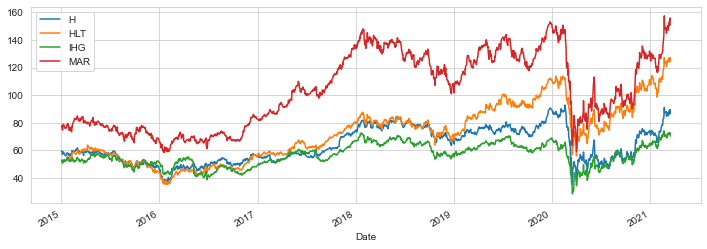
Exactly a year ago was that official announcements unveiling we were amid a Covid19 pandemic and stock markets were heavily hit. In the hotel industry specifically, the largest brands reached their minimum returns since 2015. Marriott -15%, Hilton -12%, Hyatt -19% , and IHG -20%.
But fortunately for the top hotel chains and their strong position to tackle COVID-19, the stock market recovery was pretty fast considering the magnitude of an unprecedented event moving back to levels of Hilton’s 14% to Marriott’s 20% positive return range, from ending March to beginning April last year.
Now, the behavior of their stocks today 2021-3-18 looks normal for the four chains observed, although it shows a slight decline for every chain.
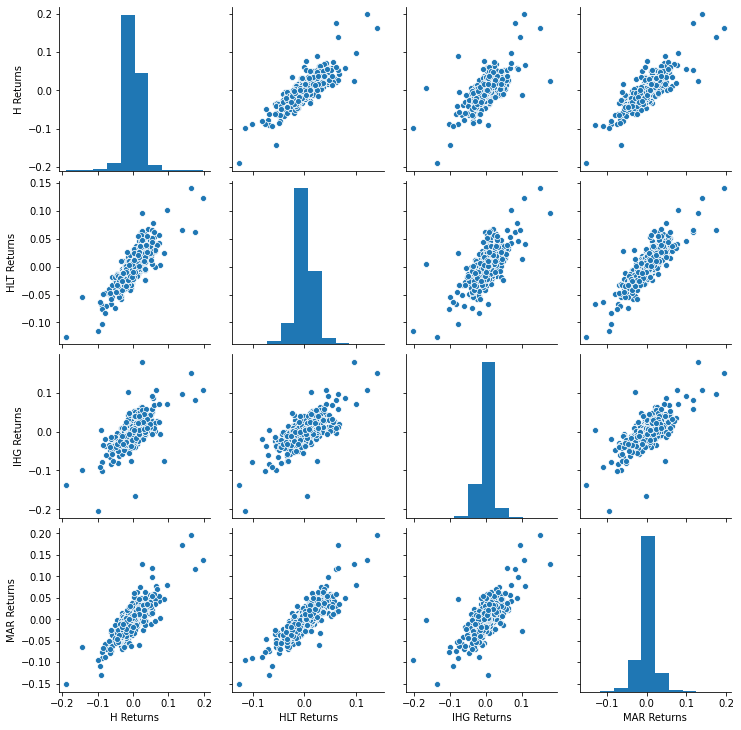
In the following plot, we can see there is a strong returns correlation between each other.
El Foro Económico Mundial ha publicado el Índice de Competitividad de Viajes y Turismo del presente año, en donde hace referencia a importantes indicadores que forman parte de un estudio que mide no sólo cantidad pero también la calidad aplicada del sector turístico y perfiles a detalle de cada una de las 136 economías que lo conforman.
En ese reporte podemos comparar el desempeño real de nuestro país en materia de turismo, en el entendido que el turismo es un sistema compuesto de varios elementos que van más allá de solo medir la llegada de turistas y derrama económica que esto genera.
Por lo tanto, el informe de competitividad mide un conjunto de factores y políticas que permiten la sostenibilidad del desarrollo de las industrias de viajes y turismo. Lo más importante es identificar al turismo como una verdadera herramienta de crecimiento sostenible e incluyente.
La industria de viajes y turismo contribuyó a la economía global con $ 7.6 trillones de dólares en el año 2016, 10.2% del producto interno bruto global y generó 292 millones de empleos en el mundo, lo que corresponde a uno de cada diez empleos. Una industria con un fuerte potencial para la generación de mayores empleos de alta calidad en el mundo y que funge como vehículo para proteger y restaurar la biodiversidad del planeta, al mismo tiempo de ayudar en la construcción de puentes entre personas y culturas diversas.
México se ubica en la posición general 22 de competitividad turística mundial, entre 136 países y desde el 2015 a la fecha se han avanzado 8 posiciones. En el primer lugar aparece España y en el último, Yemen.
El estudio analiza sus indicadores a partir de cuatro ejes de competitividad; ambiente apto de negocios, políticas y condiciones para viajes y turismo, infraestructura y recursos naturales y culturales.
En el uso efectivo de los recursos naturales y culturales, México ocupa los lugares 2 y 10 respectivamente, que sin duda son fortalezas. Sin embargo, para continuar mejorando su competitividad, México debe continuar enfocándose en hacer el país más seguro, ya que en ese rubro se ocupa el lugar 113.
Por otro lado, está la sostenibilidad ambiental, que ubica a México en lugar 116, también requiere mayor atención, ya que el compromiso con los tratados internacionales no se ha mantenido al nivel (habiendo firmado sólo 22 de 32), y una parte significativa de la fauna local sigue amenazada. El nuevo desafío para México será el de desarrollar aún más, conservando recursos y favoreciendo el medio ambiente en todos los destinos turísticos y a lo largo y ancho del país. Al mismo tiempo México tendrá que aumentar su propuesta de valor y encaminar una postura de cambio cultural y de mayor liderazgo hacia un desarrollo sostenible que verdaderamente genere impactos sociales, económicos y ambientales.
Considero que es muy importante cambiar las prioridades del sector turismo y comenzar a medir reducciones de pobreza, generación de empleo y bienestar social, así como iniciar con políticas ambientales estrictas a nivel público y privado, implementando prácticas de huella ecológica desde lo individual hasta lo colectivo.